Showing posts with label Teacher Lucila Audije Vega. Show all posts

Monday, November 15, 2021

Spanish Team participating in the mobility in Pescara

 SPANISH TEAM 

TRAVELLING TO PESCARA

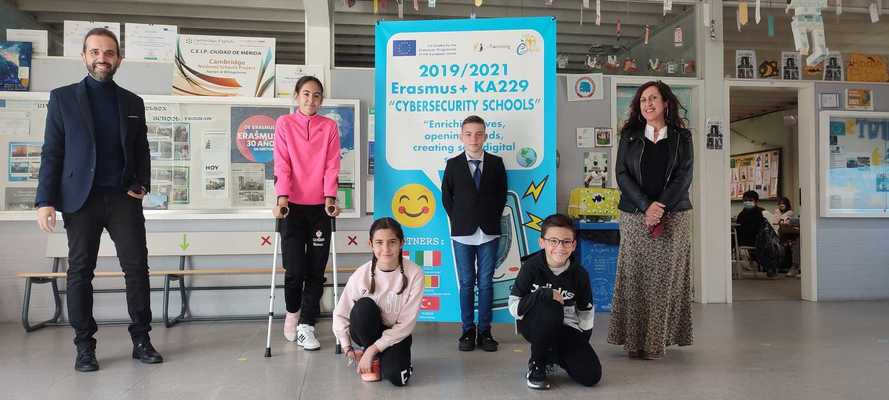
From left to right: Juan Antonio Rincón Carballo, Carlota Gomes Egea, Carla Triviño Gómez, Víctor Hernández Clemente, Mario Ruiz Fernández and María Lucila Audije Vega.

Friday, February 5, 2021

Hungarian Final Products - Starting Poland Good Practice

 HUNGARIAN FINAL PRODUCTS

Through a video call we connect all the classes involved in the good practices. The students presented their work about Hungarian good practice. As we have mentioned in previous posts, they have produced posters with tips on how to detect fake images on the web.


Click on the image to access all the photos of the session.


Click on the image to access all the drawings with tips (5º B)


Click on the image to access all the posters with tips (5º E)

STARTING POLAND GOOD PRACTICE

We started the good practice from Poland "Communication on the Internet". We presented the theoretical part of the topic which revolved around these two objectives:
  1. To be encouraged to use the Internet safely.
  2. Become familiar with the positive and negative aspects of Internet communication.
The contents and activities can be found in detail in the following presentation:


First activity: Without using verbal communication and simulating a WhatsApp conversation, the different classes talked about previously agreed topics. The aim was to reflect on when communication is best:

When we write or when we read.
When there is eye contact.
When we see emotions.

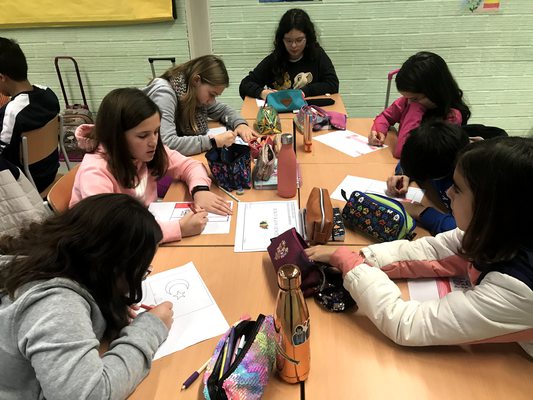
We use the following worksheet:


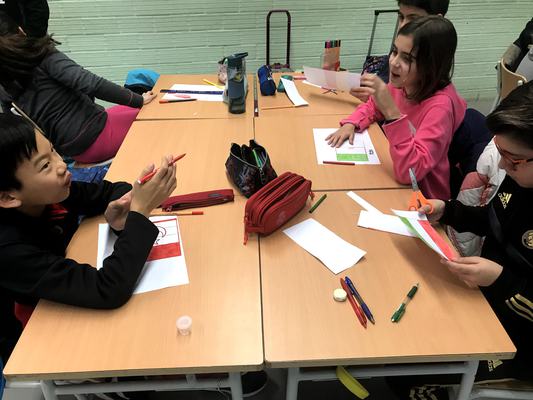
Iraide, a student in 5th grade E, reads the comments on her comments and thinks about her own message.

Generally speaking, all classes agreed that they like face-to-face communication better for the following reasons:
  • It is not good to abuse screens.
  • You know how the other person feels and you correct your own speech if you see that your partner is offended.
  • You can relate and sense whether or not the receiver agrees with what is being said. If there is a problem, a constructive discussion can be established.
  • Eye contact facilitates active listening.
  • You adapt your responses according to the feelings and emotions you see in the other person.
  • It helps our socialisation.
  • Spelling mistakes and misunderstandings are avoided.
We invite you to visit the following board where you can consult the opinions of each of the classes participating in the activity.


Hecho con Padlet
THANKS A LOT!
Friday, November 13, 2020

Romanian Good Practice: Digital resilience

Nuestros socios de Rumanía nos han diseñado una interesante e importante buena práctica sobre la resiliencia cuando navegamos por Internet. Es un tema que lo podemos aplicar tanto en situaciones online como en las presenciales. Los objetivos principales de la actividad son comprender el concepto de resiliencia y contar con estrategias que la favorezcan.


Las cinco clases nos conectamos a través de la Plataforma Meet para desarrollar las actividades que explicamos a continuación. Comenzamos con la lectura del cuento "Bailando bajo la lluvia" que nos ayudó a entender que la resiliencia "se refiere a la capacidad de los sujetos para sobreponerse a periodos de dolor emocional y traumas". Recomendamos su lectura.


Realizada la lectura cada clase reflexionamos sobre cada una de las siguientes preguntas:
  • ¿Qué experiencias tenemos cuando navegamos online?
  • ¿Qué tipo de cosas nos hacen sentir feliz, triste, preocupado, enojado o preocupado cuando navegamos online?
  • ¿Qué tipo de actividades no tienen impacto en las personas cuando navegan online?
  • Tener una experiencia negativa, ¿puede hacer que una persona deje de navegar?
  • ¿Cómo nos podemos sentir mejor si algo negativo nos ocurre cuando estamos navegando por la red?
Todas nuestras respuestas y reflexiones están contenidas en el siguiente tablero social. Os animamos a su lectura.

Hecho con Padlet

En la segunda parte de la sesión reflexionamos sobre cómo los libros que leemos, las personas que nos rodean, la música que escuchamos y nuestra propia experiencia en la red influyen en nuestra resiliencia. Para ello utilizamos como herramienta un cuestionario de google y a continuación analizamos sus resultados.

¿Por qué nuestros alumnos lo consideran así?
  • "La mayoría consideramos que tiene influencia positiva por la cantidad de recursos y el acceso a la información que tenemos, pero si no sabemos tratarla puede provocar influencia negativa. También es necesario cierto control y saber qué queremos buscar y dónde".
  • "Pasamos mucho tiempo online, algunos contenidos no son apropiados para nosotros, nos sentimos inseguros porque alguien puede estar observándonos a través de la webcam, y finalmente porque algunas personas usan Internet de una forma inadecuada para encontrar las soluciones a tareas escolares".
  • "Tenemos acceso a cualquier tipo de información o curiosidades. Podemos utilizar instrumentos o aplicaciones como el traductor, la calculadora, etc. Tenemos acceso a tutoriales y por lo tanto es una buena manera de aprender. Podemos comprar, ayudarnos y tener contacto con nuestros amigos y familias".
  • "Podemos aprender sobre lo que queramos; jugar con nuestros amigos en juegos online; gracias a plataformas como YouTube o Spotify podemos aprender nuevas canciones, mejorar nuestras listenings en otras lenguas; podemos leer libros muy interesantes, etc".
  • "La mayoría de nosotros pensamos que depende, porque podemos obtener influencias positivas o negativas. Podemos encontrar actividades interactivas que pueden ayudarnos en las tareas escolares o aprender otras asignaturas. Podemos encontrar información útil. Algunas web no funcionan. A veces no entendemos algunas web por el idioma, otras veces tenemos que pagar para ver vídeos o descargar videojuegos".

La tercera parte de la sesión se reforzó la idea de que estar influenciado puede tener consecuencias positivas o negativas para la persona y su resiliencia. Cuando la influencia es negativa podemos sentir presión y para ello hay que hacer uso de estrategias como: Aprender a decir que no, evitar pensamientos negativos y trabajar con frases potenciadas (Yo puedo, soy capaz, soy fuerte, soy creativo, soy bueno, mostrar los sentimientos es natural...). Comentamos los siguientes consejos para ser más resilientes:
  • Confía en ti mismo: Es fundamental estar convencido de lo que uno piensa para así poder defenderlo frente a los demás con argumentos coherentes y siempre con una actitud de respeto.
  • La importancia del entorno: Es importante construir un entorno positivo en el que haya optimismo.
  • Mirando hacia el futuro: A veces somos poco flexibles a los cambios y pensamos que cualquier tiempo pasado fue mejor. Hay que pensar en el futuro con la mente abierta.
  • Cuídate: Es fundamental pensar en el propio bienestar. Si no estás bien no puedes ayudar a los demás. Dedica un tiempo para pensar en ti.
  • Busca objetivos: Ponte metas y plazos razonables para cumplirlas. Es una manera muy práctica de ver como el esfuerzo tiene su recompensa.
  • Control de la frustración: Intenta ser justo contigo mismo y no te castigues. Es importante que aprendas a conocer tus reacciones, sentimientos y emociones, y consigas un equilibrio entre ellas que te ayude a crecer como persona.

En la última parte de la sesión ofrecimos una batería de actividades para seguir trabajando desde las tutorías este importante concepto. Se trata de una propuesta flexible que cada tutor adaptará a las necesidades e intereses de su alumnado. Los productos finales de cada una de las clases serán expuestos en la siguiente sesión dentro de dos semanas y en este blog. Damos las gracias a todas las personas que siguen el progreso de nuestro proyecto a través de esta fantástica herramienta como es blogger.

RECURSOS DE LA SESIÓN


ENGLISH VERSION

Our partners in Romania have designed for us an interesting and important good practice on resilience when surfing the Internet. It is a topic that we can apply both in online and face-to-face situations. The main objectives of the activity are to understand the concept of resilience and to have strategies to support it.

The five classes connect through the Meet Platform to develop the activities explained below. We started with the reading of the story "Dancing in the rain" which helped us understand that resilience "refers to the ability of subjects to overcome periods of emotional pain and trauma". We recommend its reading.

After reading each class we reflect on each of the following questions:
  • What experiences do we have when going online?
  • What sort of things make us feel happy, sad, worried, angry or worried when we go online?
  • What sort of activities do not have an impact on people when they surf online?
  • Having a negative experience, can it make a person stop going online?
  • How can we feel better if something negative happens to us when we are online?
All our answers and reflections are contained in a Padlet. We encourage you to read it.

In the second part of the session we reflected on how the books we read, the people around us, the music we listen to and our own experience on the web influence our resilience. We used a google questionnaire as a tool and then analyzed the results.
60%: It's a positive influence.
20%: It's a negative influence.
20%: We don't know.
Why do our students consider this to be the case?
  • "Most of us feel it has a positive influence because of the amount of resources and access to information we have, but if we don't know how to deal with it it can lead to negative influence. You also need to have some control and know what you want to look for and where.
  • "We spend a lot of time online, some content is not appropriate for us, we feel unsafe because someone may be watching us through the webcam, and finally because some people use the Internet in an inappropriate way to find solutions to school tasks".
  • "We have access to any kind of information or curiosities. We can use tools or applications such as the translator, the calculator, etc. We have access to tutorials and therefore it is a good way to learn. We can shop, help each other and have contact with our friends and families".
  • "We can learn about whatever we want; we can play with our friends in online games; thanks to platforms like YouTube or Spotify we can learn new songs, improve our listenings in other languages; we can read very interesting books, etc".
  • "Most of us think it depends, because we can get positive or negative influences. We can find interactive activities that can help us with homework or learn other subjects. We can find useful information. Some websites do not work. Sometimes we don't understand some websites because of the language, other times we have to pay to watch videos or download video games".
The third part of the session reinforced the idea that being influenced can have positive or negative consequences for the person and their resilience. When the influence is negative we can feel pressure and for that we have to use strategies such as: Learning to say no, avoiding negative thoughts and working with empowered phrases (I can, I am capable, I am strong, I am creative, I am good, showing feelings is natural) We comment on the following tips to be more resilient:
  • Trust in yourself: It is essential to be convinced of what you think so that you can defend it against others with coherent arguments and always with an attitude of respect.
  • The importance of the environment: It is important to build a positive environment in which there is optimism.
  • Looking ahead: Sometimes we are inflexible to change and think that any time in the past was better. You have to think about the future with an open mind.
  • Take care of yourself: It is fundamental to think about your own well-being. If you are not well, you cannot help others. Take time to think about yourself.
  • Seek objectives: Set yourself reasonable goals and deadlines to achieve them. This is a very practical way to see how the effort is rewarded.
  • Frustration management: Try to be fair to yourself and don't punish yourself. It is important that you learn to know your reactions, feelings and emotions, and get a balance between them that helps you grow as a person.
In the last part of the session we offered a battery of activities to continue working from tutoring this important concept. This is a flexible proposal that each tutor will adapt to the needs and interests of his or her students. The final products of each of the classes will be presented in the next session in two weeks and in this blog. We thank all the people who follow the progress of our project through this fantastic tool as a blogger.

Friday, February 21, 2020

E6 Cultural activities on Poland prior to mobility

Today Lucila is presenting us the country we are visiting next week. We are going to do our Second Mobility to Poland.


Lucila presenting us Poland. She is disguised as "Mother Earth" because we were celebrating Carnival and we were all dressed up with the same theme.

She told about:
  • Geography: Poland is located in the centre of Europe.
    • Tatra Mountains: They are very famous because its height and lakes. In its fauna, we can highlight brown bears, lynxes and wolves.
  • Anna Frank, 2nd World War and Auschwitz are important facts about this country.
  • Prime Minister: Mateusz Morawiecki.
  • There are several cities very important in Poland:
    • Warsaw: It is the capital of Poland. It was totally destroyed in the 2nd World War. Now it is a wonderful city.
    • Cracow: Mamen was there. It's a very beautiful city. She visited a castle and she was in the river.
    • Gdansk: It's the Baltic Pearl because it has a beach and in winter you can see snow and beach.
  • Important characters:
    • Nicolas Copérnico.
    • Irene Sendler: She was a nurse and saved thousand of kids. She was nominated for the Nobel Peace Prize, but she didn't get it.
    • Chopin: He is a very important musician.
    • Marie Curie: She got two Nobel Prizes. One because he discovered polonium and the other because of radioactivity.
    • Juan Pablo II: He was a very important Pope and he was proposed for sainthood, but in the end he didn't make it.
    • Roman Polanski: Director of famous films for which he has received several awards such as "The Pianist"; "Oliver Twist"...
    • Lech Walesa: He is a Nobel Prize. 
    • Wjociech Kilar: Author of Dracula's soundtrack.

Pupils of the 6th level with a lot of attention in Lucila's presentation.

THANK YOU, LUCILA!
Tuesday, February 11, 2020

"Answering isn´t always the best solution"

We continue with an activity about "Answering isn't always the best solution". In this case children have done poster with the conclusions.


Photos of our students in 5º B


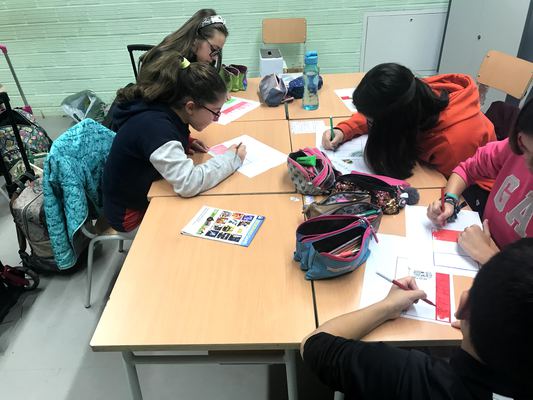
2ª sesión de los alumnos de 5º A diseñando pósteres con las conclusiones obtenidas en la actividad. Utilizamos la herramienta web ThePosterMyWall y la cuenta del grupo "foronativos". Enlace.

Tuesday, January 28, 2020

E6 Peace Day Activities: Erasmus+, Poland and Peace

PEACE DAY ACTIVITIES

Peace Day, free image in Pixabay.
To celebrate the Day of Peace, we have decided to join Peace and Poland, as this is the city where we will have our next mobility.
This year was the 75th anniversary of the end of World War II and the liberation of the concentration camps. Bearing in mind that Poland was one of the countries most affected by this conflict, that Auschwitz was one of the most famous camps and that a person as important as Anne Frank was in it, we decided to work with all these elements to reflect with the children on all that was experienced.
We worked in a way that was adapted to each course in each class. At each class, a different level of detail was achieved, adapted to the needs and ages of the children. The activities are contained in the official blog of the project.

Next, we show some work evidences with photos and videos.

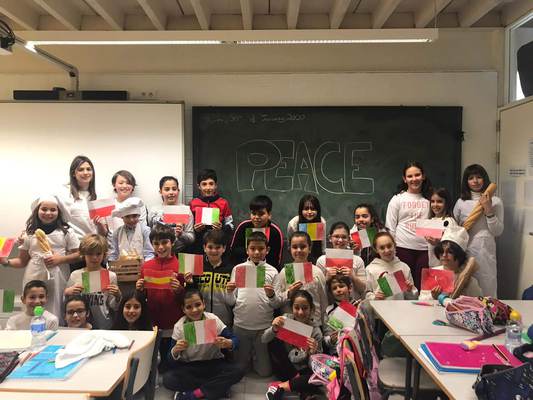
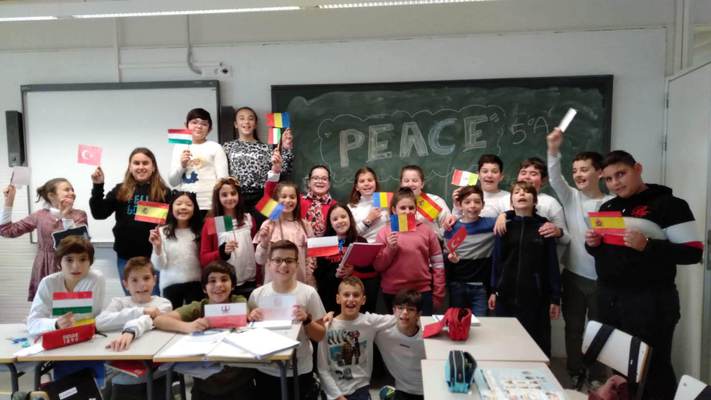
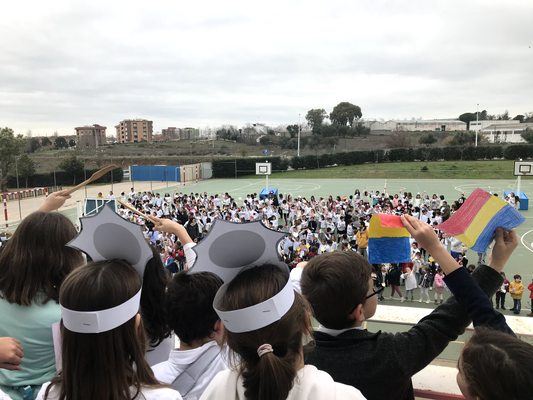
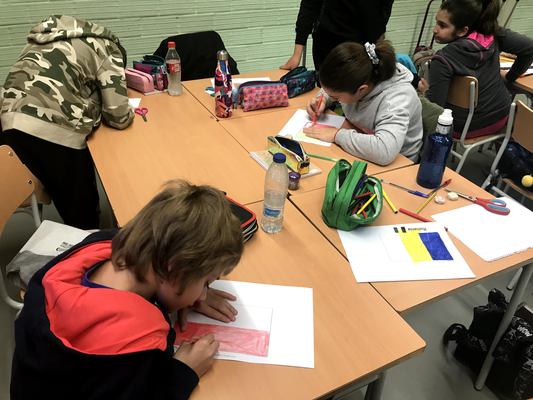
Our students made the flags of Poland and the other countries participating in our Erasmus Project. They were displayed in the joint school activity.

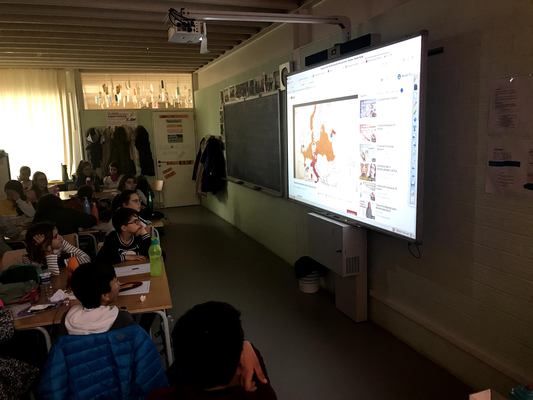
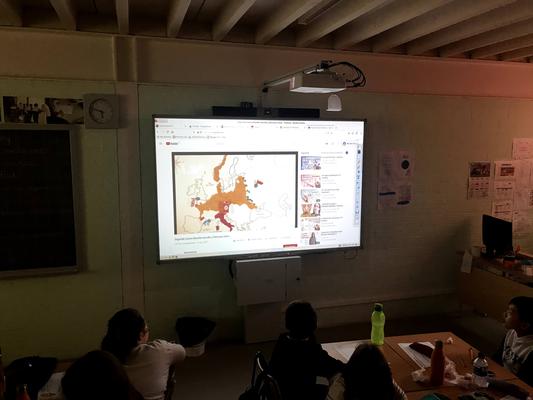
Students watching some of the videos we selected for the celebration of this educational event.
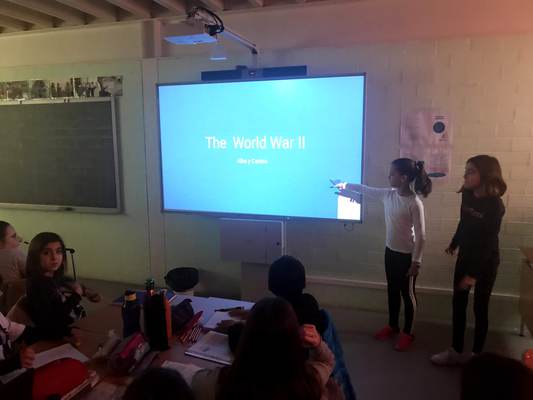
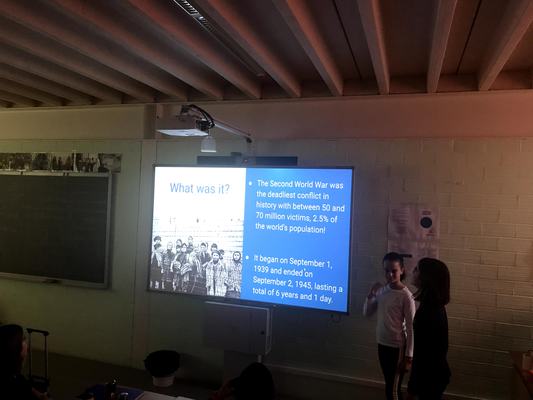
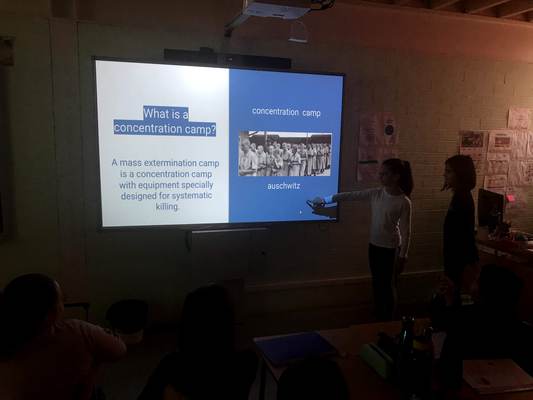
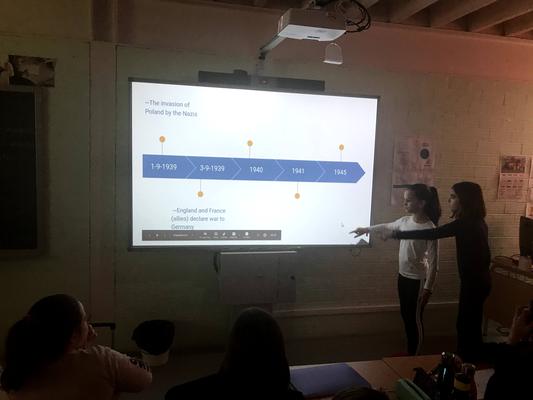
Alba and Carlota were very motivated by the topic and did some small research on World War II which they presented. These were presented to their classmates.
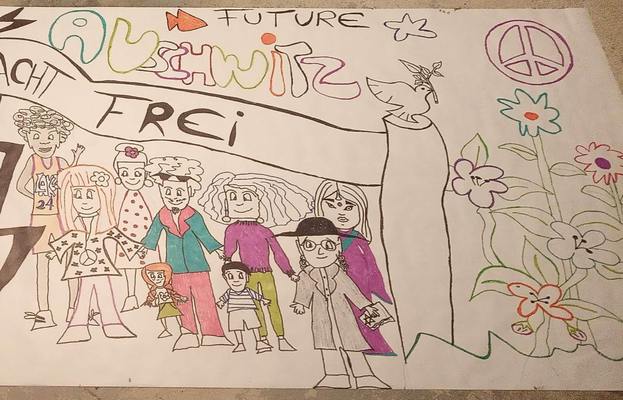
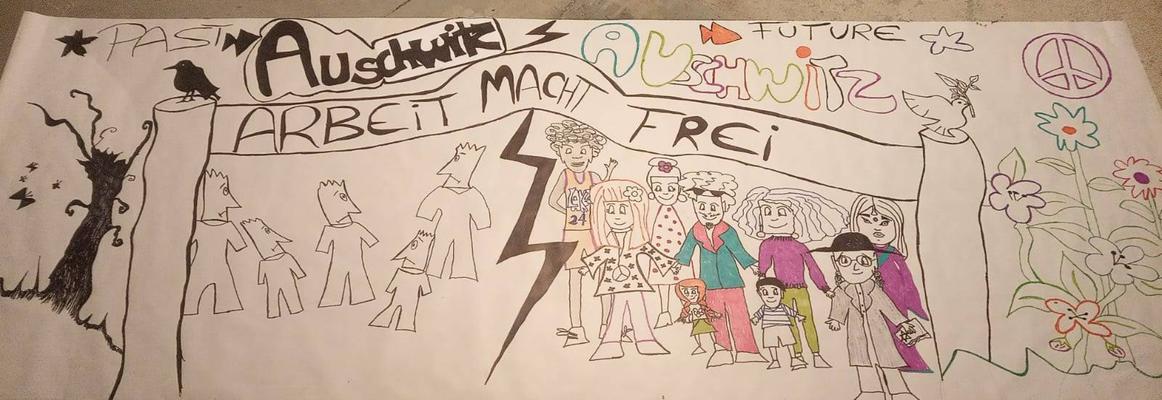
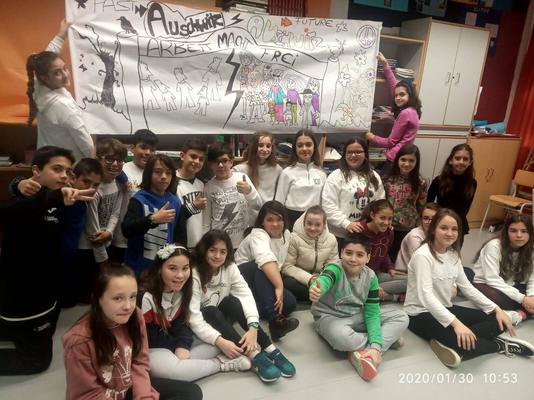
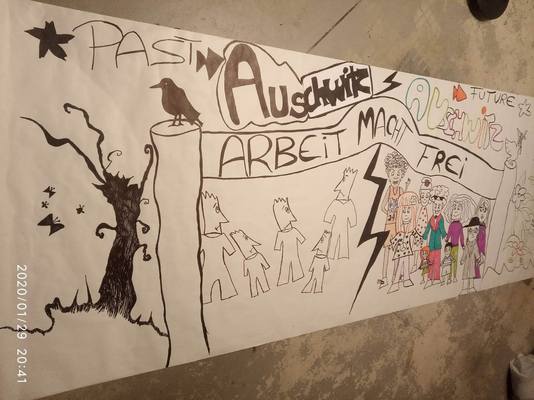
big poster about the past and future of Auschwitz was made by pupils of 6th A.

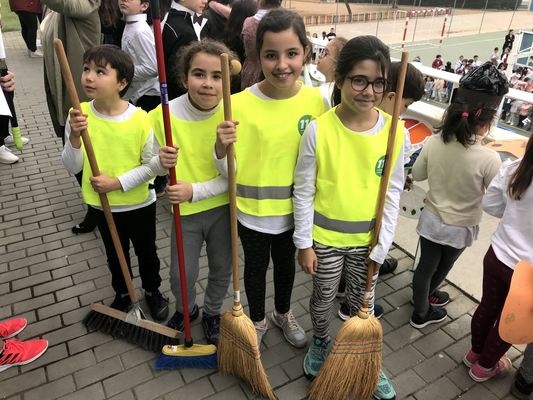
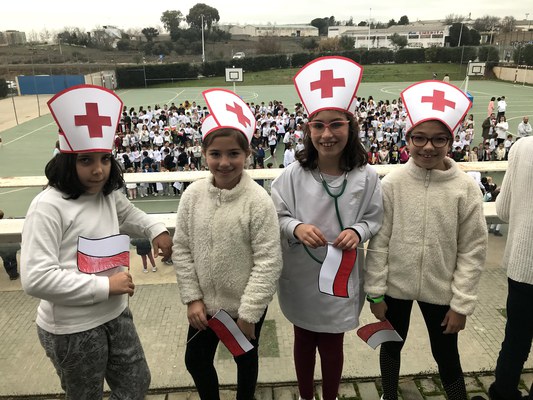
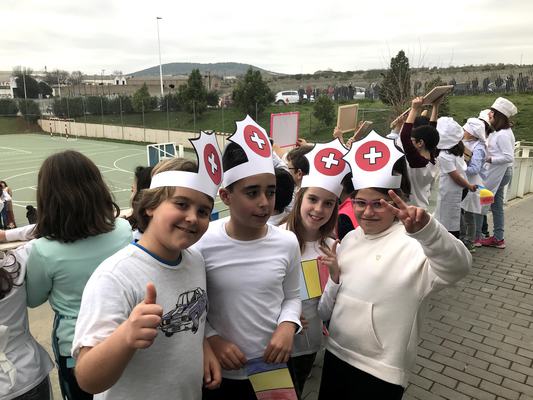
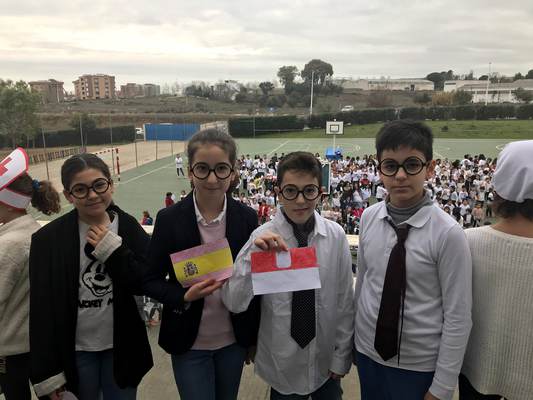
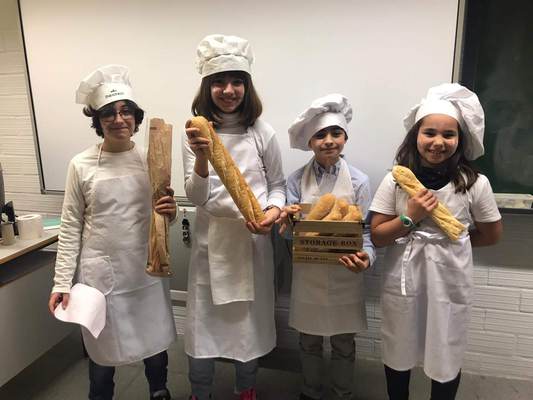
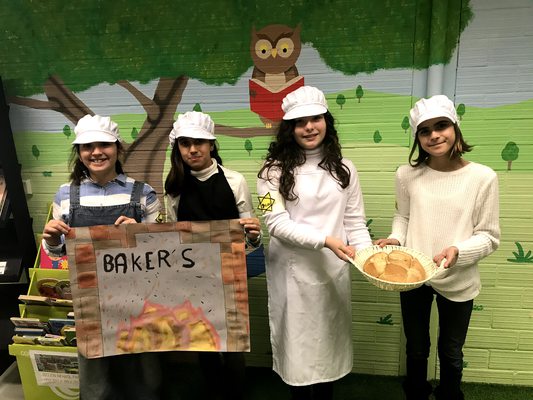
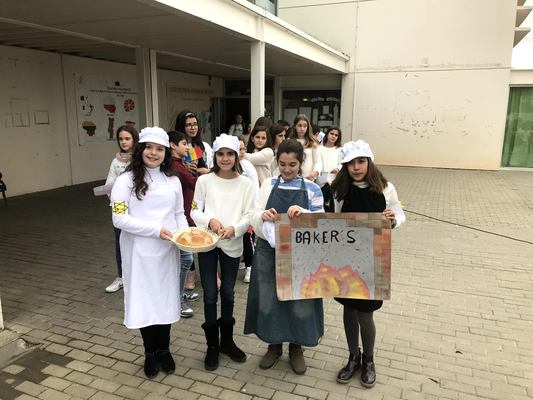
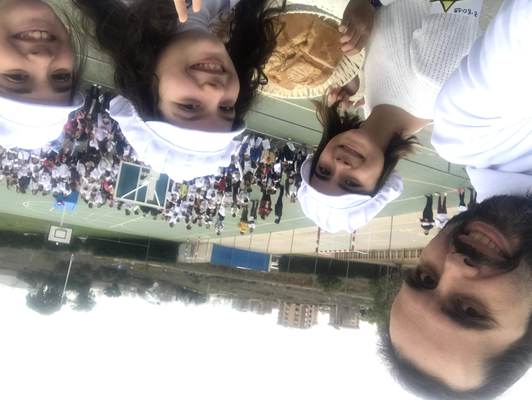
The whole centre commemorated a celebration they do in Warsaw. One day the city is silent and paralyzed, while the sirens are heard in homage to the victims of the war. Each class group represented a collective of workers.
SWEEPERS
NURSES
JOURNALISTS
BAKERS
The students read the following manifesto on behalf of Anne Frank.

During the minute's silence a tune by Frédéric Chopin was played, as he was a Polish musician.
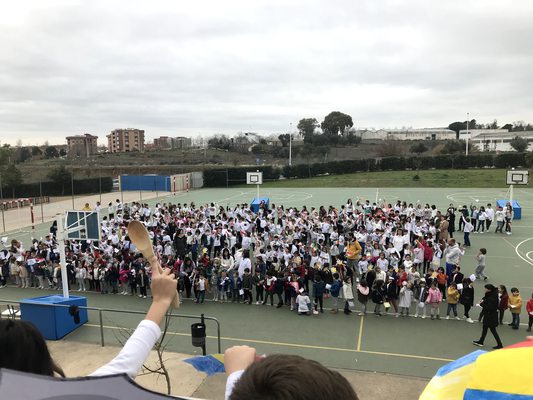
At the end, all the members of the activity, teachers, students and parents, gave a big applause in memory of the victims.
These are pictures of our group as a united center on this important day.