Showing posts with label Muévete. Show all posts

Thursday, March 12, 2020

OndaLlera knowing about Cybersecurity Schools

El pasado 12 de marzo en el marco del Programa Muévete, los alumnos del CEIP. Ciudad de Badajoz, capitaneado por su Teacher José Antonio Torres de Vera, nos hicieron una entrevista vía telefónica para conocer nuestro Proyecto Erasmus.


Adrián Casilda, Yessenia, Manuel y Estrella nos hacen la entrevista.

El CEIP. Ciudad de Badajoz participa en el programa Muévete para el intercambio de experiencias educativas. Nuestros teachers Daniel y Nieves se encontraban allí para aprender muchas cosas, entre ellas el funcionamiento de su radio escolar "OndaLlera". Ellos no sabían que habíamos estado planificando una conexión en directo entre ambos centros y quedaron muy sorprendidos. En esta actividad también participaron los colegios María Auxiliadora de Villar del Rey, y el CEIP. Pedro Vilallonga Cánovas de San Vicente de Alcántara. A este último le guardo un cariño muy especial porque fue mi centro de destino definitivo como maestro de primaria durante tres años. Fue muy emotivo encontrarme por las ondas con su director y compañero Joaquín Ortega González.


Nuestro Teacher Daniel participando en la actividad.

Nos preguntaron por los objetivos, los países que participamos, los diferentes tipos de actividades que desarrollamos, el número de alumnos participando en el proyecto, cuáles fueron nuestras motivaciones como centro para realizar este proyecto, las movilidades que habíamos realizado hasta el momento, cuál era la organización y estructura de una actividad de intercambio de alumnos y profesores, cómo nos coordinamos los socios en este tipo de proyectos y sobre nuestro producto final, la celebración dentro de dos años del I Congreso Internacional Bilingüe sobre Ciberseguridad.


En la mesa de trabajo.

Gracias a los alumnos Adrián Casilda, Yessenia, Manuel y Estrella por tan fantástica entrevista. También agradecemos a José Antonio Torres de Vera y a su Equipo Directivo por habernos dado la oportunidad de participar en esta bonita actividad.


En el centro Nieves (coordinadora del programa Muévete) y Daniel.

Os invitamos a escuchar la entrevista completa haciendo clic en el siguiente enlace.


ENGLISH VERSION

On March 12th, within the framework of the "Muévete" Program, the students of the CEIP. Ciudad de Badajoz, led by their Teacher José Antonio Torres de Vera, gave us a telephone interview to learn about our Erasmus Project.


The School Ciudad de Badajoz participates in the program "Muévete" for the exchange of educational experiences. Our teachers Daniel and Nieves were there to learn many things, among them how their school radio works. It is called "OndaLlera"They did not know that we had been planning a live connection between the two schools and were very surprised. The schools María Auxiliadora in Villar del Rey and Pedro Vilallonga Cánovas of San Vicente de Alcántara also participated in this activity. I have a very special affection for the latter one because it was my final destination as a primary teacher for three years. It was very moving to meet his director and colleague Joaquín Ortega González on the airwaves.


We were asked about the objectives, the countries participating, the different types of activities that we develop, the number of students participating in the project, what were our motivations as a school to carry out this project, the mobilities that we had carried out so far, what was the organization and structure of an exchange activity for students and teachers, how we coordinated the partners in this type of project and about our final product, the celebration in two years of the First International Bilingual Congress on Cybersecurity.

Thursday, January 23, 2020

Muévete Session

In this class, we have been lucky because we have received the visit of other teachers. The teachers came from differents schools:
Nuestra Señora de Guadalupe (Miajadas).
Montero Espinosa (Almendralejo).
Las Eras (Malpartida de Plasencia).
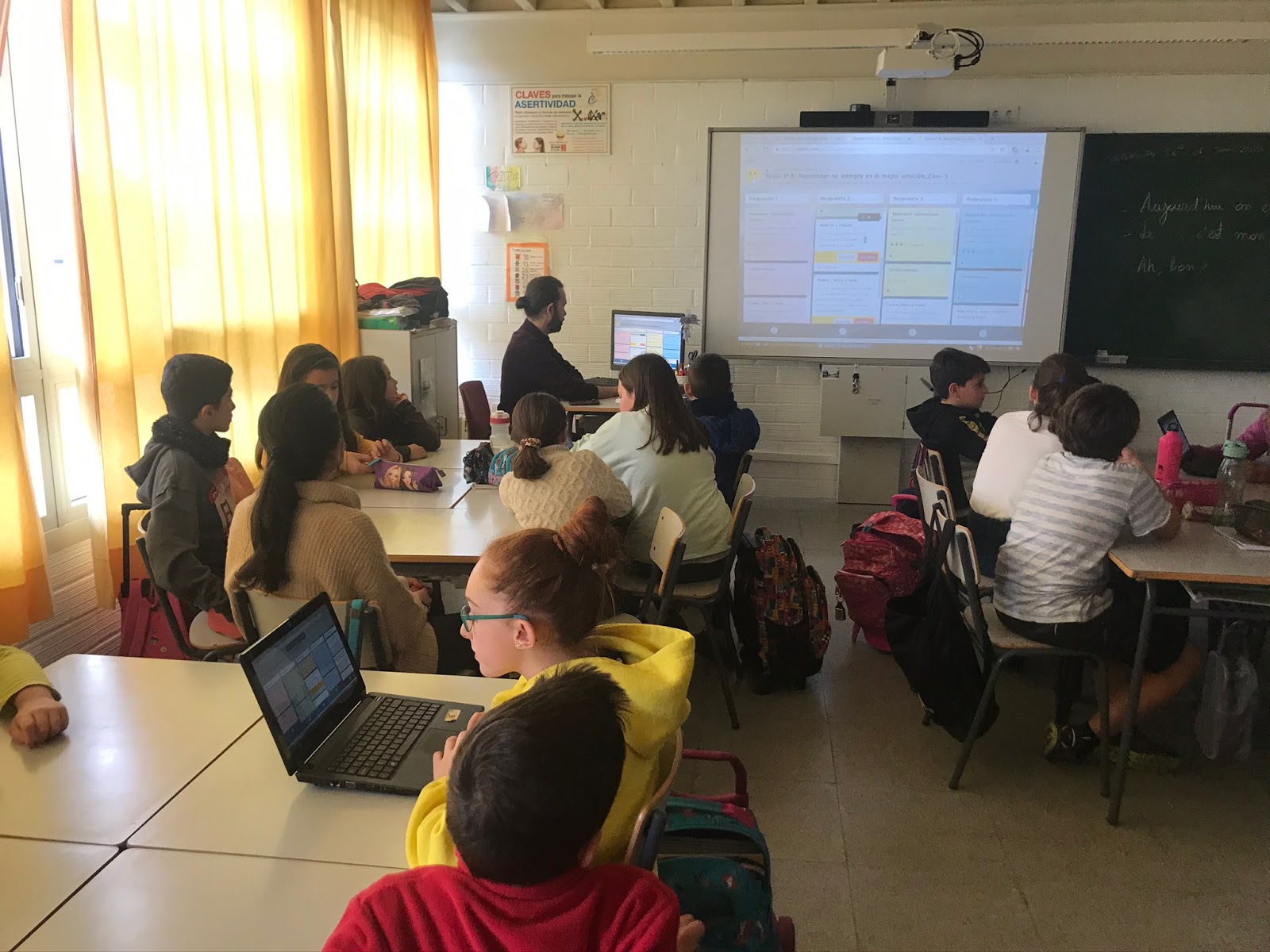
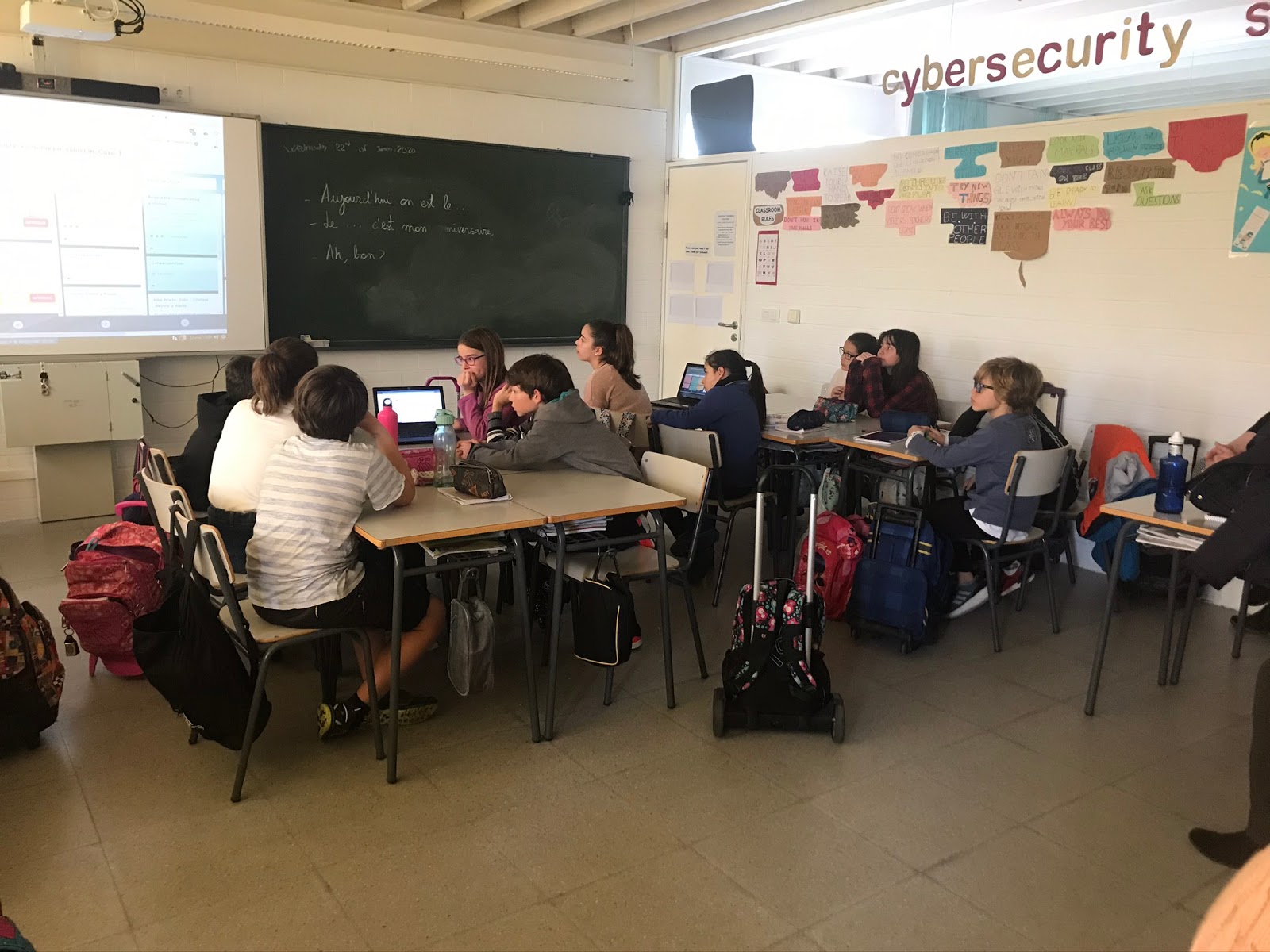
In this class we have worked a new practice that it have been prepared by Juan Antonio. Its name is "Answering isn´t always the best solution". We think it is important think what we can answer when someone critizices us. The pupils have reflected and they have given very curious answer.


Wednesday, January 22, 2020

Junior Emprende - Cyber guides - Muévete


These are the students who will act as cyber-tour guides in the sixth mobility in Spain. They will be in charge of explaining the most important monuments and places in our city. They are organized in small groups and are currently designing the routes they wish to investigate, study and explain.

Teacher Eva Moriel in one of the sessions of the Muévete Program explained to the teachers how the Junior Emprende program was carried out in previous years and what is its current link with the #ErasmusPlus Project "Cybersecurity Schools".


Tuesday, January 21, 2020

Dissemination activity: Muévete!


Teachers participating in the program at the entrance of our school.


As we mentioned in a previous entry, our center participates in a regional program called "Muévete". It has been a great opportunity to open the doors of our school to other teachers in the region and to show our projects. In the case of the Erasmus Project we have organized the experience in two sessions that we explain below.

In the first session we made a presentation of the project in which we talked about the origin, participating organizations, priorities, themes, objectives and activities carried out so far. Next you can visualize and read the presentation we made.
We explain that in our project different types of activities are carried out to accommodate all the students of the centre: specific, cultural, virtual, dissemination... Among them we emphasized those referred to "good practices" as they would be the basis for session number 2, of observation in the classroom. The practice is titled "Answering is not always the best solution" and pursues the following objectives:
  • To learn to manage communicative interactions with safety and self-protection criteria.
  • To use consequential thinking before making decisions.
  • To study cases of students who go through complicated situations derived from the misuse of electronic devices.
  • To assess what response is best before verbal attacks on the network.
  • To work collaboratively through web 2.0 tools such as Padlet.


The practice has been implemented in several courses. The students read the case studies and had to empathize with the protagonists to try to give the most effective solutions. To do this, we distributed the students into four groups. To each one, at random, we assigned a color to differentiate the four communicative styles:
  • Red: Aggressive responses.
  • Green: Assertive answers.
  • Orange: Passive or avoidance responses.
  • Blue: Answers that defer the situation.
The web tool we used was a Padlet board, configured to give a collaborative response to the activity. The students had to read the answers and judge the suitability to solve the situation. They did this with a voting system included in the board that allowed them to put stars. We agreed that one star meant "poor suitability to resolve the situation"; five stars "very effective communication that resolves the situation". All agreed that the best way to solve a conflict on the net is through an assertive type of response:

"What you're doing offends and angers me, but no matter how many times you call me a mute, you're going to get what you want. I've decided to use WhatsApp responsibly and if you don't respect my decision I'm willing to go to an adult and tell them what you're doing with me".

The least accepted responses were aggressive, passive and avoidant.

Students 5º A responding to case nº 1


Students from 5th B in the observation session.

6th grade students working on one of the cases.

All concluded that an assertive response is one that has the following characteristics:
  • There are no insults.
  • It is a polite and respectful response, given from calm and quiet.
  • It is a response that respects our wishes and therefore offers alternatives to the interlocutor or justifies why we do not do a certain action that we do not want or agree with.
  • It is a response that may include a third person who can act as a mediator to resolve the situation.
Together we think of phrases that we can use in our daily conversations that will help us to be more assertive. These are the following:
  • I feel bad because...
  • Please...
  • What you're doing to me...
  • I feel bad the way you're talking about me, please, would you stop?
  • Could you talk to me differently?
The final product will be the realization of interactive posters with the conclusions obtained and the cybermentors will record a radio program where they will explain everything they have learned with this good practice.

The final products will be displayed in this or other publications.

Hecho con Padlet

Friday, January 17, 2020

Erasmus - Muévete

"Muévete" is a program of the Junta de Extremadura (Regional Government of Extremadura) that promotes that teachers can make training stays in the public schools of the region previously selected for developing successful innovative initiatives, so that they can observe in situ how other colleagues work in different competence areas and can learn different ways of working, which they adapt and apply in their own schools.


Our school will be observed next week on three different lines. One of them is bilingualism and includes our Erasmus Project. During two sessions colleagues from three schools will see how we are implementing our project "Cybersecurity Schools". These schools are:


Nuestra Señora de Guadalupe (Miajadas).
Montero Espinosa (Almendralejo).
Las Eras (Malpartida de Plasencia).

It will be an excellent opportunity for dissemination!