Showing posts with label Teacher Juan Antonio Rincón Carballo. Show all posts

Thursday, August 18, 2022

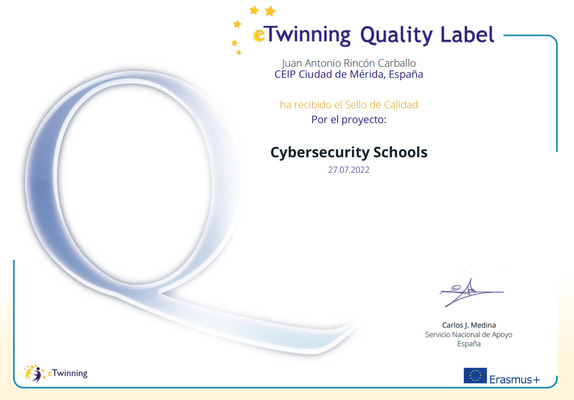
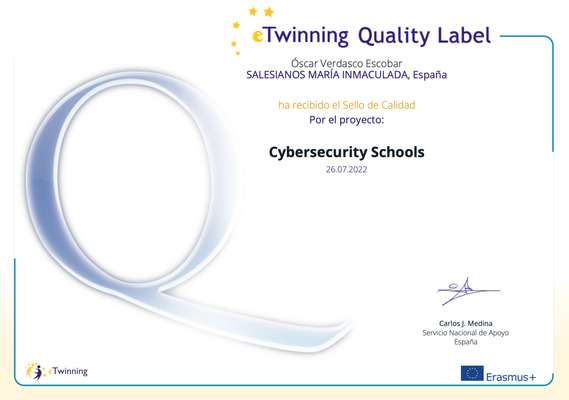
Quality Label Teachers

 Our project has received the quality seal. In Spain, the following teachers have received it:

Gallardo Pajuelo, Daniel

Rincón Carballo, Juan Antonio (Coordinador)

Rivas Ortiz, Rebeca

Sáez Pardo, Cristina

Verdasco Escobar, Óscar


CONGRATULATIONS!
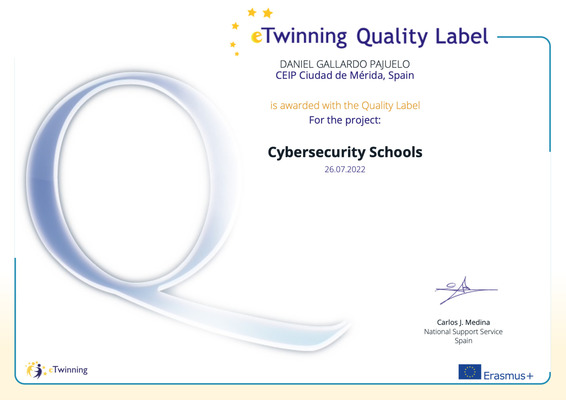

Quality Label Students

 Alumnado y profesorado del equipo español han recibido el Sello de Calidad Nacional como reconocimiento al esfuerzo individual. En esta publicación os presentamos los diplomas del alumnado de 6º E (Teacher Juan Antonio Rincón Carballo). ¡Enhorabuena a todos!


Tuesday, June 9, 2020

Presentación trabajo cibermentores 6º A

Hoy ha sido el gran día.
Se han estrenado nuestros alumnos de 6º A con su tema sobre las FAKE NEWS.
En la sala han estado unas 80 personas escuchando su exposición, entre alumnos, teachers, familiares representante del CPR  y nuestro inspector Vicente Valero.
Gonzalo, Javier, Irene, Sara y Pacomio han estado muy tranquilos y han expuesto con claridad todo lo que han aprendido sobre el tema.
Estamos encantados con su trabajo, han sido unos CIBERMENTORES EXCELENTES.
¡Buen trabajo chicos!


Vídeo completo en YouTube de la sesión.

En la sesión online.

No hay ninguna descripción de la foto disponible.
Logo de nuestro proyecto

---------------------------------------------------------------------------------
Today was a great day!
Our 6th grade students have premiered with their theme about FAKE NEWS.
About 80 people have been listening to their presentation, including students , teachers, relatives, CPR representative and our inspector Vicente Valero.
Gonzalo, Irene, Sara, Javier and Pacomio have been very calm and have clearly explained everything they have learned on the subject.
Good job guys!
We are delighted with their work, they have been  EXCELLENT CYBERMENTORS.

Wednesday, May 20, 2020

Piensa antes de enviar - Think before you send!

Nuestro logo de Equipo

Hoy los cibermentores de 6º C, en nuestro proyecto Erasmus Cybersecurity Schools, en la cuarta sesión de Foros Nativos:

  • Hemos visto un video que se llamaba 3,57 grados de separación. Nos explicaba que ahora tenemos la facilidad de poder contactar con una persona a través de otra en poco tiempo                        

https://es.noticias.yahoo.com/video/facebook-demuestra-que-ya-no-140811072.html

  • Hemos aprendido que las redes sociales nos facilitan la comunicación y podemos ponernos en contacto hasta con personas desconocidas. Los buscadores nos facilitan esa tarea y somos conscientes de los riesgos que tiene conectarse con un desconocido (grooming, ciberacoso, phising...). También tiene aspectos positivos como resolver dudas con profesores o expertos en una materia, podemos dar continuidad a nuestros aprendizajes, aprendemos idiomas...
  • Hemos aprendido sobre privacidad a través de un juego: trataba de que Juan Antonio nos mandaba a cada Cybermentor una foto por Hangouts y teníamos que pensar si la compartiríamos o no con los demás cibermentores o también compartírsela a Eva o Juan Antonio.                                                                                           Hangouts - Wikipedia, la enciclopedia libreGoogle Hangouts


Después hemos reflexionado ¿por qué lo hemos compartido o por qué no?, ¿a cuántas personas le ha llagado la foto? o si nos hubiera gustado que hubiera llegado tan lejos esa foto. Hemos visto las graves consecuencias que puede tener compartir determinadas fotos. 


Profes y alumnos trabajando en la sesión.

ENGLISH VERSION

Today we have carried out the 4th session developing our final product about privacy.

  • We watched a video called "3,57 of degrees separation". It explains to us that if we want to communicate with someone it is easier thanks to Social Networks.
  • We have learned that social networks make it easier for us to communicate and we can even get in touch with strangers. Search engines make this task easier for us and we are aware of the risks involved in connecting with a stranger (grooming, cyber-bullying, phising...). It also has positive aspects such as solving doubts with teachers or experts in a subject, we can give continuity to our learning, we learn languages...
  • We played a game: Juan Antonio sent to each cybermentor a picture by hangouts and we have to decide to share or no with the other cybermentors. Teachers Eva and Juan Antonio participated in the game.
At the end we reflected about these questions: Why do we share or not? How many people have been touched by the photo? Or if we wished that picture had gone this far. We have seen the serious consequences that sharing certain photos can have.

Drive, Cyberbullying and Privacy

Today we have studied about how drive works with pupils of the 5th level. As we have mentioned in previous posts this tool is very important for us and for our project because it allows us to work in a collaborative way.

Pupils of the 5h level learning how to use Google Drive with teachers Marcelino and Juan Antonio

Pupils in the 6th level have started their final presentations about cyberbullying and privacy. We will follow the next calendar:

  • Wednesday, 27th of May: We are finishing the presentation.
  • Wednesday, 3rd of June: We'll do the oral presentation rehearsal.
  • Wednesday, 10th of June: With Zoom Platform pupils will present their works to their classmates.
  • Wednesday, 17th of June: Pupils and teacher will disseminate our final products in an eTwinning event.
Pupils of 6º C learning about Privacy in the Internet with teachers Eva Moriel and Juan Antonio


Pupils of 6th B finishing their work about Cyberbullying with teachers Eva Moriel and Juan Antonio

Thursday, May 7, 2020

United for online security in the Internet


Hoy los cibermentores de 6º C hemos hecho nuestra segunda sesión de Foros Nativos y nuestro querido Erasmus KA229 "Cybersecurity Schools".

Hemos hecho un kahoot para poner a prueba lo que sabemos. Os invitamos a realizarlo para que comprobéis cuánto sabéis de este tema. Ha salido bastante bien:

  • En la primera pregunta tuvimos que decir si la identidad digital es la información sobre una persona que encontramos en Internet. Era verdadero y 3 personas acertaron.
  • En la segunda teníamos que responder a la pregunta: ¿Qué es  menos importante para tu reputación online?La respuesta era: Lo que hago cuando estoy con mis amigos. Nadie acertó. En esta pregunta aprendimos que hay varias formas de configurar tu cuenta en redes sociales. Por ejemplo cuando un amigo te etiqueta le podemos dar el visto bueno si queremos o no que salga en nuestra biografía.
  • En la tercera teníamos que decir si la frase era verdadera o falsa: La identidad digital se caracteriza por su perdurabilidad. Era verdadera, 3 personas acertaron. Todavía no somos conscientes de la repercusión que puede tener para nuestro futuro las fotos o vídeos que subamos hoy a cualquier red social.
  • En la cuarta pregunta teníamos que señalar la opción incorrecta: No es sencillo configurar las condiciones de uso de cualquier red social. Cuatro persona acertaron.
  • En la quinta pregunta teníamos que decir si la frase era verdadera o falsa: Una aplicación que me bajé y he dado permiso para usar red social puede afectar a mi privacidad. Era verdadera y 5 personas acertaron.
  • En la sexta pregunta consistía en elegir que podía crear fallo en la red social. Ahí hubo duda y por eso decidimos dar todas las respuestas por buenas.
  • En la séptima pregunta teníamos que elegir la respuesta falsa en relación al control de la identidad. Aprendimos que asumimos muchos riesgos si publicamos fotos todos los días sobre cualquier tema. Cuatro personas acertaron.
  • En la última pregunta teníamos que decir si era verdadero o falso que las redes sociales deben configurar los perfiles de sus usuarios para mejorar su privacidad. Era falso. Han acertado siete personas. Todos tenemos una gran responsabilidad a la hora de configurar cada uno de los servicios que utilicemos.

He aquí el podium:


Hoy también hemos aprendido a guardar los archivos del Drive en carpetas. Como buena medida de cuidar nuestra privacidad en una sala online cuando vayamos a compartir la pantalla hay que quitar todo lo que no queramos que nadie vea.


English Version


Today the 6º C Cybermentors have participated in our second session of Native Forums and the Erasmus Project: Cybersecurity Schools. 

We have played with kahoot to test what we know about Privacy, online identity and reputation. We invite you to play the game in order to know your knowledge about this important issue. It went pretty well.

  • In the first question we had to say if the digital identity is the information about a person that we found on the Internet. It was true. Three people got it right.
  • In the second one we had to answer the question: What is less important for your online reputation? The answer was: All the things I do when I am with my friends. Nobody got it right. In this question we learned that there are several ways to set up our accounts in social media. For example, approving our labels.
  • In the third one we had to say if the following sentence is true or false: Digital identity is characterized by its durability. It was true and 3 people got it right. This is an important aspect that we have to learn due to our age. A nice photo today can provoke bad consequences in the future.
  • In the fourth question we had to point out the wrong choice. It was "The language of conditions of use is simple". This is referred to the conditions of privacy when we are configurations our social accounts. Four people got it right.
  • In the fifth question we had to say if the phrase "An application that I download and have given permission to use social network can affect my privacy". It was true and five people got it right.
  • In the sixth question was to choose what could create failure in the social network. There was doubt so we decided that two answers were correct.
  • In the seventh question we had to choose the false answer about the necessity of controlling our identity. It is not convenient to publish photos or videos about any topic everyday. Four people got it right.
  • In the last question we had to say whether it was true or false that "social networks should set up their users' profiles to improve our privacy". It was false because is our responsibility. Seven people got it right.

Today we also learned how to save the files on the Drive in folders and to remove private things of our computers when we are sharing our screens.

Wednesday, May 6, 2020

Seguimos Unidos contra el Ciberacoso


Hoy en esta sesión estamos revisando que cada uno haya hecho lo acordado, estamos decidiendo las nuevas tareas y recibiendo consejos de nuestros profesores.

Ahora os contaré sobre esa actividad que consiste en que cada uno poco a poco haga su parte buscando y resumiendo información sobre su apartado.


Captura de pantalla del documento colaborativo en el que estamos trabajando.

El grupo de cibermentores de 6º B os desea un feliz día y esperamos que os haya gustado esta entrada.

 #QuédatEnCasa

English Version

In this session we are checking if everyone has done the part that we agreed. Then we decided the new work for this week and we got advice from our teachers.

Now I'm going to tell you about this activity. It consists of completing a part of a collaborative document little by little with the summaries of our previous readings.

Cibermentors 6º B wish you a happy day and we hope you liked this post.

#StayAtHome

Monday, March 2, 2020

Our best moments in Poland

In this post we share a selection of photos with our best moments lived in mobility that we have just finished with our partners in Poland. We have sorted them by days.
Nuestros alumnos hicieron su propio álbum de fotos que compartimos a continuación:


Sunday, 23 February 2020
Departure from Mérida bus station.


Monday, 24 February 2020
Group photo at the entrance of the school


Tuesday, 25 February 2020
Photo of the teachers participating in the mobility. We continue to get to know the school facilities and the projects that the students are developing.


Near the museums we were going to visit


At the Croissant Museum


Wednesday, 26 February 2020
At the University of Mathematics and Computer Science.


Thursday, 27 February 2020
Our students in a workshop on protecting our data in the applications we download to the devices.


At the University of Mathematics and Computer Science: Workshops in science laboratories.


Friday, 28 February 2020
Workshop: A lapbook about Poznan.


Closing the program of activities


Saturday, 29 February 2020
At the airport in Poznan


Our arrival in Merida